Low Waste Initiatives

Composting Hair Clippings
Why Compost Hair Clippings?
Hair clippings are a powerful, often-overlooked compostable resource. Rich in nitrogen and keratin, hair helps support healthy soil by slowly releasing nutrients as it breaks down. When composted, hair can improve soil structure, retain moisture, and even help deter certain pests—making it especially valuable for gardens and urban green spaces. By composting hair clippings, salons reduce landfill waste and return natural materials back to the earth, closing the loop in a truly regenerative way.

Nomad Beauty is a proud member of the Green Beauty Community. A collective group of likeminded beauty professionals striving to encourage more sustainable options within the industry.

Low Tox Hair Color + Color Waste
Nomad Beauty utilize Evo Hue Verse hair color. Low Tox, Non Ammonia based color.
Why do we not dump our color down the drain?
Regardless of the quality there can be chemicals in hair color and other hair care products can be harmful to the environment, contaminating waterways, soil, and air. These chemicals can harm aquatic life, plants, and other wildlife, and can also contribute to air pollution and greenhouse gas emissions.
Properly disposing of chemical waste is an important aspect of sustainable practices. By reducing waste and properly disposing of hazardous materials, hair salons can reduce their environmental impact and contribute to a more sustainable future.
How we do this is collect in a safe bin, when it’s full we take it to a local waste disposal site.
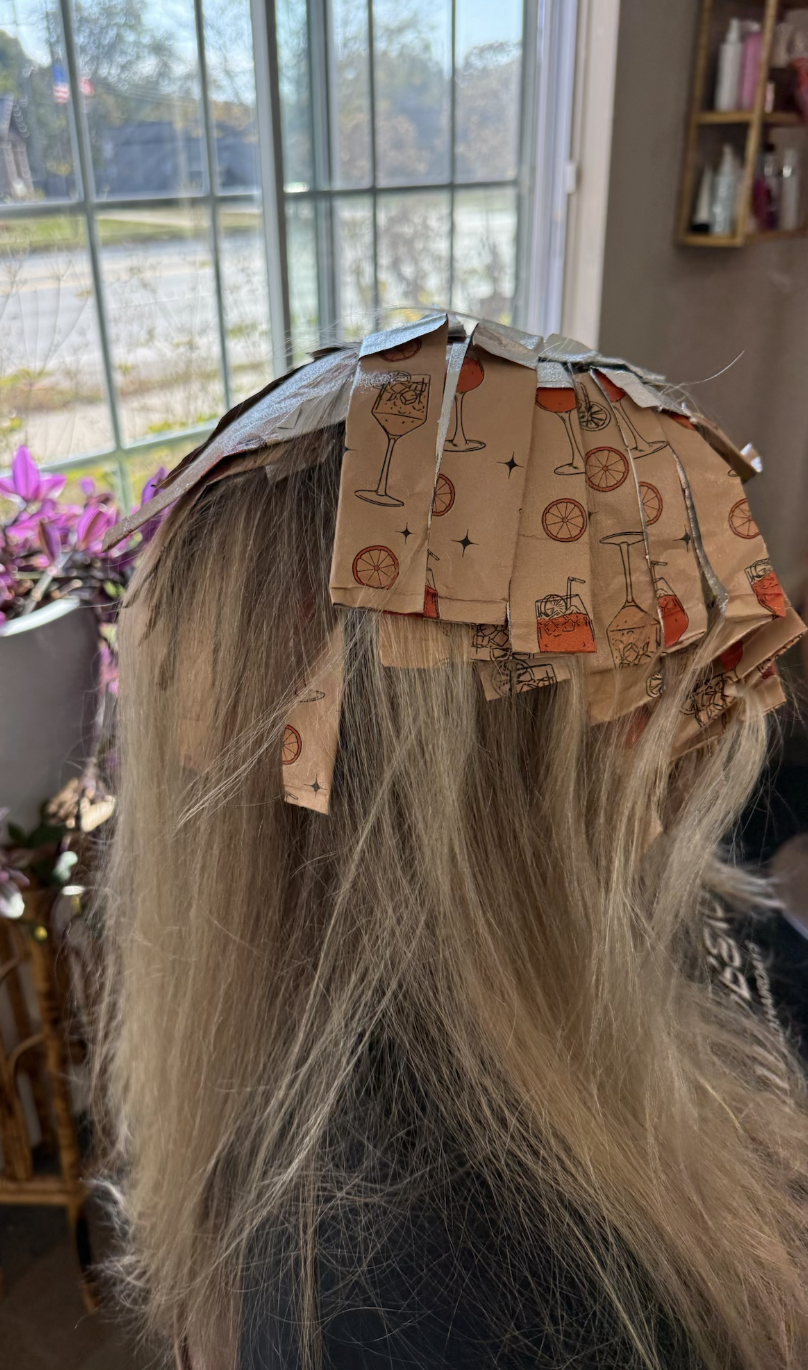
Recycling Aluminum Foil + Color Tubes
Nomad Beauty partners with a local metal recycling facility to responsibly dispose of our metals. Our color tubes and hair foil are collected and returned to be melted down and reused for other products.
♻️The reason aluminum foil takes a long time to degrade is because aluminum is a metal that is highly resistant to corrosion and oxidation. In landfills, where oxygen and moisture levels are often limited, aluminum foil is unlikely to undergo significant degradation through natural processes.
By recycling, the aluminum can be recovered and used to create new products, reducing the need for extracting and refining new aluminum ore.